
Why Visit Interlaken
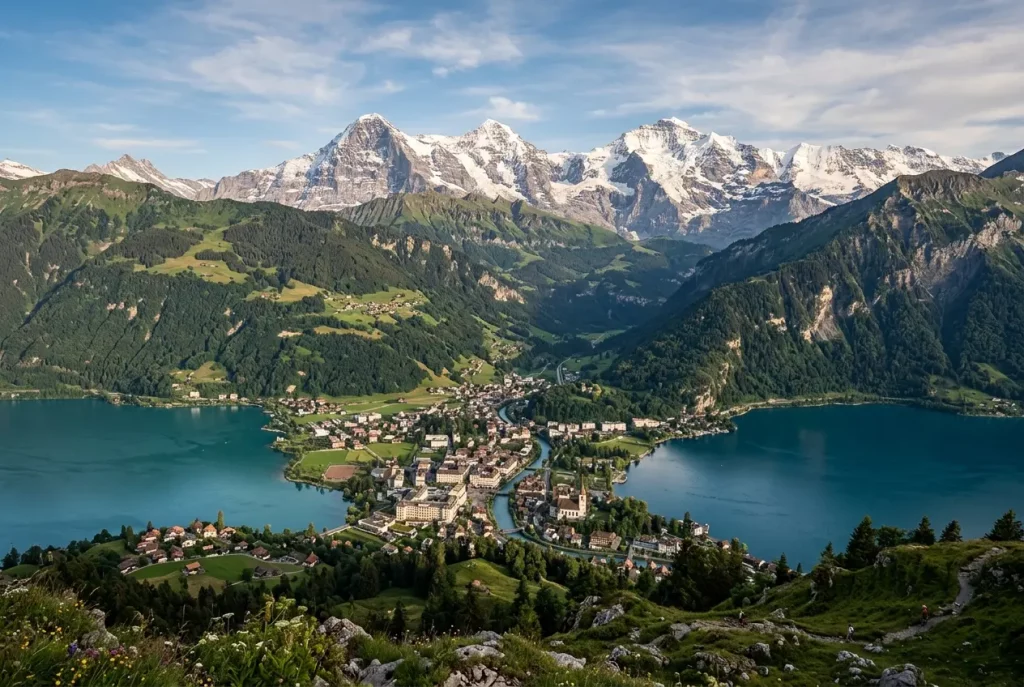
Interlaken occupies a remarkable position between Lake Thun and Lake Brienz, with the mountains of the Bernese Oberland rising around the town and the Jungfrau Region within easy reach.
Its appeal is less about one individual landmark than its position within the landscape. From a single base, travellers can combine lakes, mountain railways, Alpine villages and some of Switzerland’s most dramatic high-altitude scenery.
Interlaken also provides a useful balance for a private itinerary. The town offers exceptional hospitality, restaurants and wellness, while the surrounding region opens into Lauterbrunnen, Grindelwald, Wengen and the wider Jungfrau mountains.
For travellers who want to experience several sides of the Swiss Alps without changing hotels every day, Interlaken can be an especially practical and rewarding base.
Between Lake Thun and Lake Brienz
The two lakes give Interlaken much of its identity.
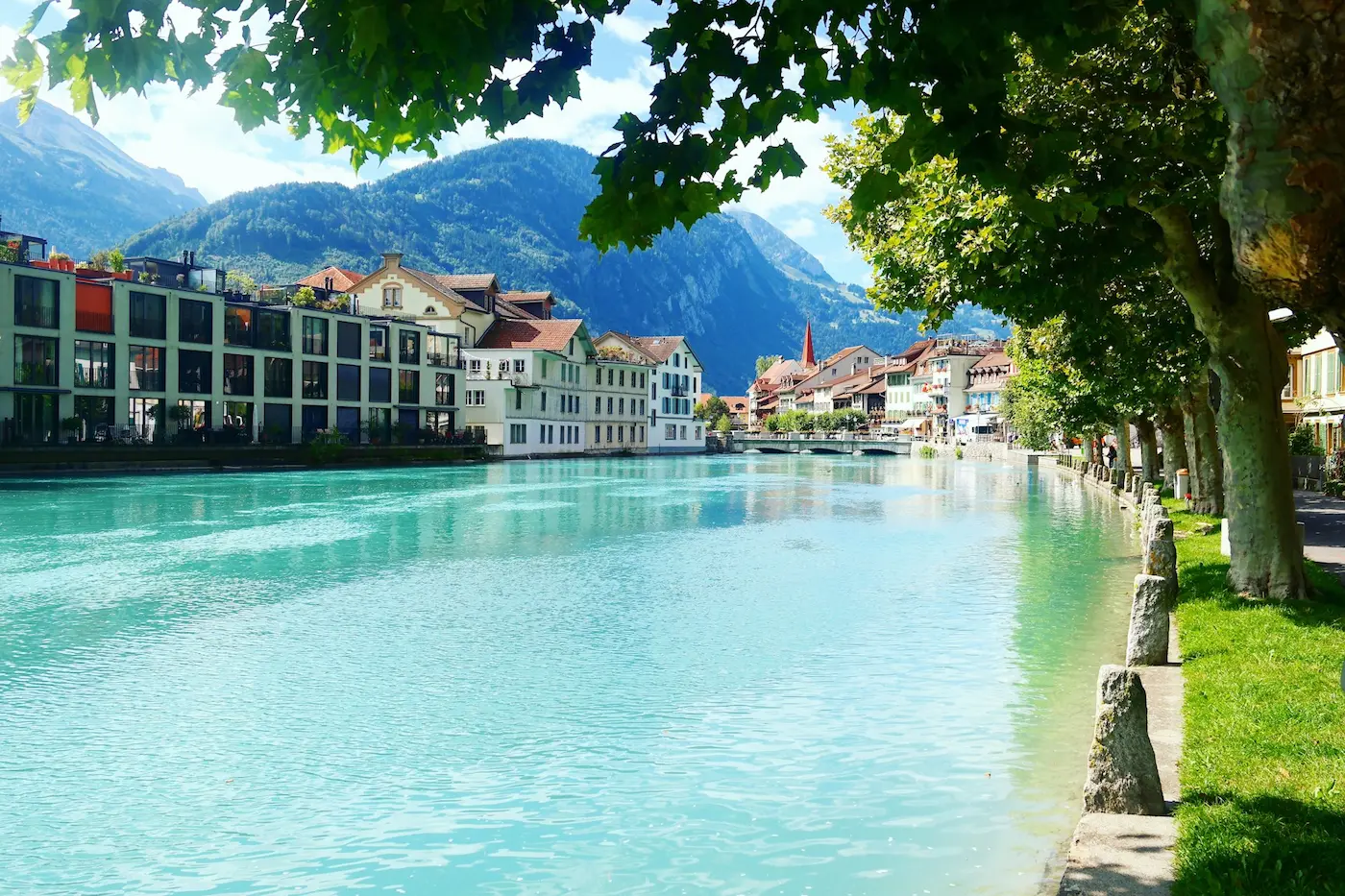
Lake Thun extends westwards through a landscape of mountains, villages, castles and lakeside hotels, while Lake Brienz is known for its distinctive turquoise water and steeper Alpine surroundings.
Together, they add a completely different dimension to a stay that might otherwise focus entirely on the mountains.
Lake Thun
Lake Thun works naturally with private boat experiences, lakeside dining and scenic journeys through the western side of the Bernese Oberland.
Its broader shores also connect Interlaken with places such as Spiez and the landscapes towards Thun, creating opportunities for quieter days away from the higher mountains.
Lake Brienz
Lake Brienz has a more dramatic Alpine character, with steep slopes rising close to the water and small villages positioned around its shores.
The lake can be combined with scenic boat travel, private excursions and places such as Giessbach, creating a very different atmosphere from Lake Thun despite the short distance between them.
Gateway to the Bernese Oberland
Interlaken is particularly valuable because many of the region’s most recognisable Alpine destinations lie beyond the town rather than within it.
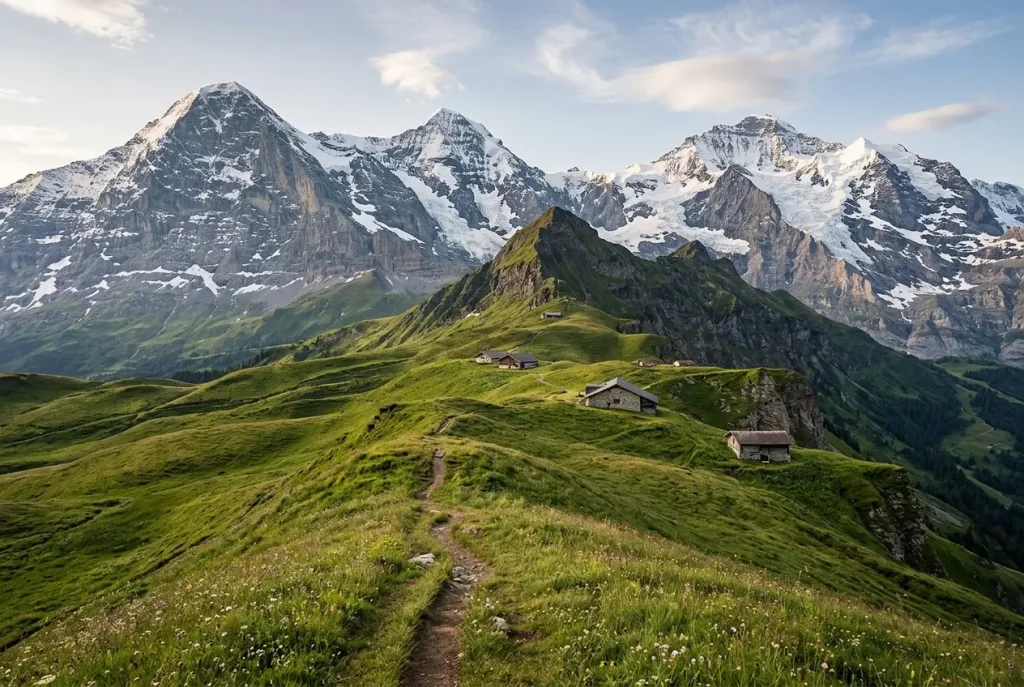
The Eiger, Mönch and Jungfrau form the mountain backdrop to the region, while the valleys and villages around them provide some of Switzerland’s most memorable mountain experiences.
The Jungfrau Region
The Jungfrau Region extends deeper into the mountains beyond Interlaken and includes destinations with very different identities.
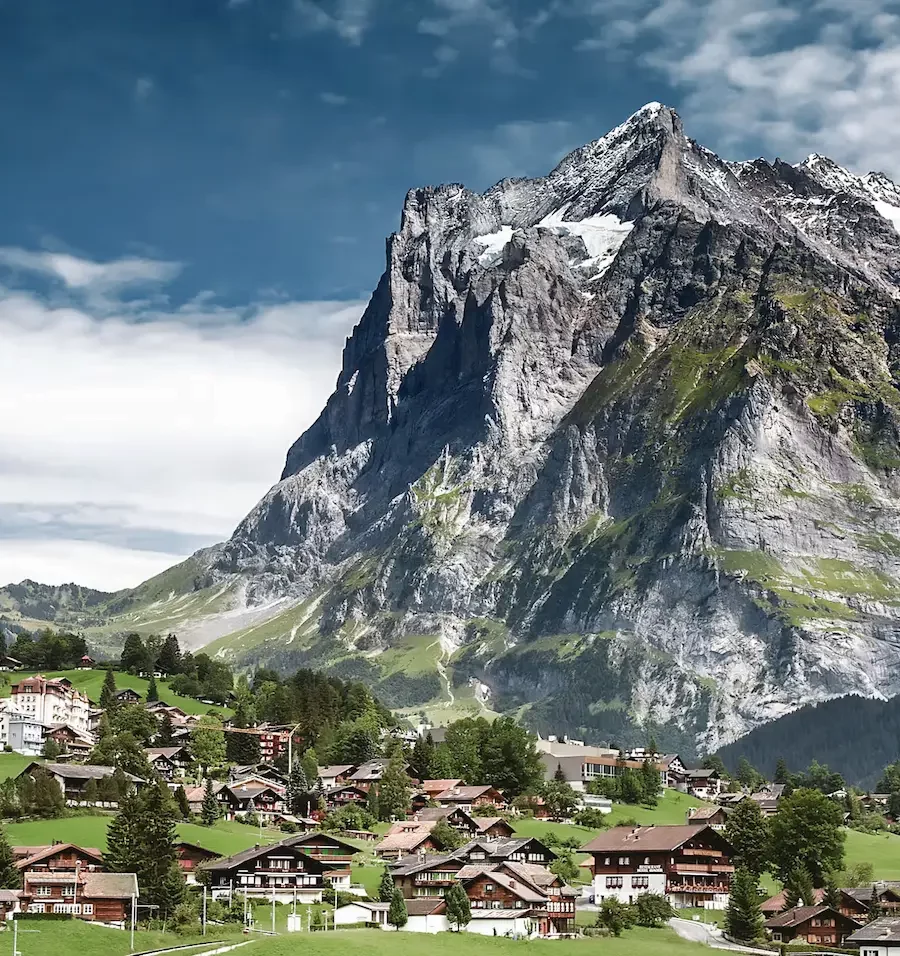
Lauterbrunnen is defined by its narrow Alpine valley and waterfalls, while Grindelwald sits beneath the dramatic north face of the Eiger.
Wengen offers a car-free mountain-village atmosphere above the Lauterbrunnen Valley, while Jungfraujoch provides one of the region’s best-known high-altitude experiences.
Each deserves to be experienced in its own right rather than treated simply as another attraction in Interlaken.
Harder Kulm
Closer to town, Harder Kulm provides an immediate introduction to the landscape around Interlaken.
From above, the unusual geography becomes much clearer, with Lake Thun and Lake Brienz extending on either side of the town and the high peaks of the Bernese Alps beyond.
It works particularly well as a shorter mountain experience when a full day in the Jungfrau Region is not required.
Where to Stay in Interlaken
Interlaken and the surrounding lakes offer several different interpretations of a premium stay, from historic grand hotels in the centre to quieter properties positioned directly within the landscape.
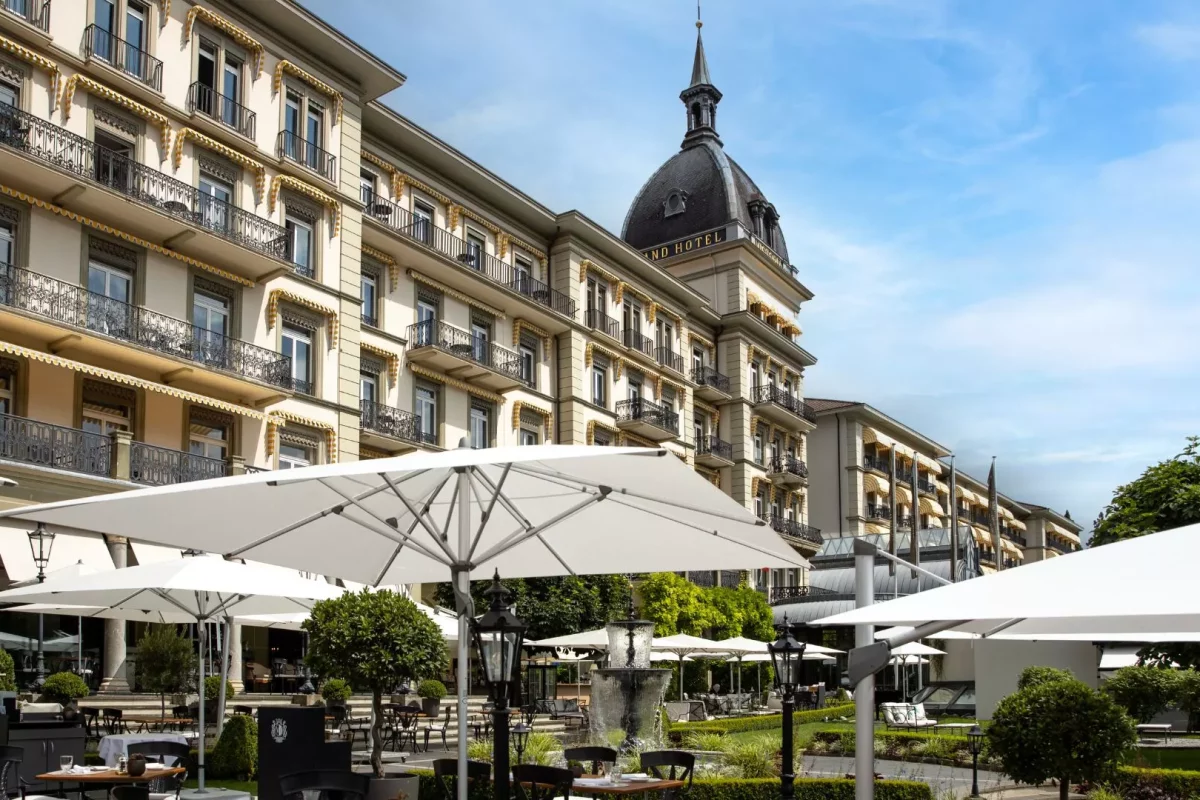
Victoria-Jungfrau Grand Hotel & Spa is the defining grand-hotel address in central Interlaken, combining Belle Époque heritage, extensive wellness and views towards the Jungfrau massif.
Grand Beau-Rivage offers another historic option on Höheweg, positioned closer to Interlaken Ost and the eastern side of town.
Hotel Royal St. Georges Interlaken brings a more intimate heritage atmosphere, with a central position between the town, Harder Kulm and the principal mountain connections.
Hotel Interlaken provides a long-established alternative within the historic part of the town, particularly convenient for travellers who want to remain close to Interlaken Ost.
Beyond the centre, Grandhotel Giessbach offers a completely different experience overlooking Lake Brienz, combining historic architecture with a secluded setting surrounded by forest, water and mountains.
Our hotel collection can progressively bring together these different styles of stay, allowing travellers to choose between central convenience, grand-hotel hospitality and a more secluded lakeside experience.
Exceptional Experiences in Interlaken
Interlaken is best approached as a starting point rather than a checklist of attractions.
The strongest experiences often begin in town and continue towards the lakes, valleys or high mountains of the Bernese Oberland.
Jungfraujoch and the High Alps
Jungfraujoch is one of the defining high-altitude experiences of the region.
Rather than treating it simply as a sightseeing stop, a private day can be planned around the complete journey, mountain conditions and the other places the traveller wishes to combine with it.
Its scale and popularity also mean it deserves a dedicated experience page rather than extensive detail on this destination hub.
Lauterbrunnen and Grindelwald
Lauterbrunnen and Grindelwald provide two very different interpretations of the Bernese Alps.
Lauterbrunnen centres on the extraordinary geography of its valley, while Grindelwald offers a more open mountain setting dominated by the Eiger.
Both can be reached as part of a private day from Interlaken, but each is substantial enough to deserve its own editorial content.
Private Time on the Lakes
A private boat experience on Lake Thun or Lake Brienz provides a quieter contrast to the high mountains.
The lakes can form part of a relaxed day of scenery and dining or be incorporated into a wider journey through the Bernese Oberland.
Scenic Flights and the Landscape from Above
Interlaken has a long association with aerial experiences because of the extraordinary concentration of lakes, valleys and high peaks around the town.
For travellers looking for a more exclusive perspective, privately arranged scenic flights or helicopter experiences can reveal the relationship between the lakes, Interlaken and the surrounding Alpine landscape in a way that is impossible from the valley floor.
Interlaken Through the Seasons
Interlaken changes considerably throughout the year, but its seasonal identity is closely connected to the wider Bernese Oberland.
Summer in Interlaken
Summer places the lakes, hiking, mountain railways and outdoor landscapes at the centre of the stay.
Longer days make it easier to combine several environments within the same itinerary, moving from Lake Thun or Lake Brienz into the valleys and higher mountains.
It is also an ideal period for scenic journeys, private hiking experiences and days that combine mountain landscapes with lakeside dining.
Winter in Interlaken
Interlaken itself is not primarily a ski resort.
Its winter value comes from its position as a gateway to the ski areas and mountain villages of the Jungfrau Region, including Grindelwald and Wengen.
This allows travellers to stay in Interlaken while accessing snow-based mountain experiences during the day and returning to the hotels, restaurants and wellness facilities of the town afterwards.
When to Visit Interlaken
There is no single best season.
Spring through autumn is particularly attractive for travellers who want to combine the lakes with hiking and mountain experiences.
Winter suits travellers who want the Bernese Oberland under snow while maintaining Interlaken as a central base rather than staying directly within a ski resort.
Adventure, Experienced Privately
Interlaken is internationally known for adventure activities, but that does not mean every experience needs to follow a mass-market format.
The landscape naturally lends itself to paragliding, scenic flights, hiking and other outdoor experiences.
For Luxury Switzerland, the focus is on selecting experiences that can be arranged privately or integrated intelligently into a wider itinerary.
This may mean a privately guided mountain day, an individually arranged scenic flight or a paragliding experience planned around the rest of the journey rather than purchased as an isolated activity.
Getting Around Interlaken Privately
Central Interlaken is compact and does not require a chauffeur for every movement.
Private travel becomes more valuable when the itinerary extends into the wider Bernese Oberland, involves several locations in the same day or includes significant luggage.
A chauffeur can also simplify hotel-to-hotel journeys and private excursions towards Lake Thun, Lake Brienz or the mountain valleys beyond Interlaken.
For travellers arriving from western Switzerland, our Geneva to Interlaken Transfer provides dedicated point-to-point information.
Continue Your Journey from Interlaken
Interlaken sits naturally within a wider journey through Switzerland.
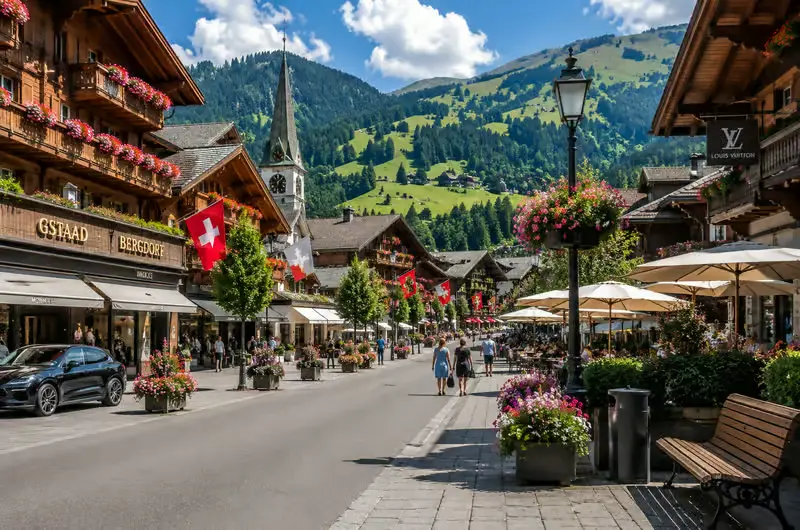
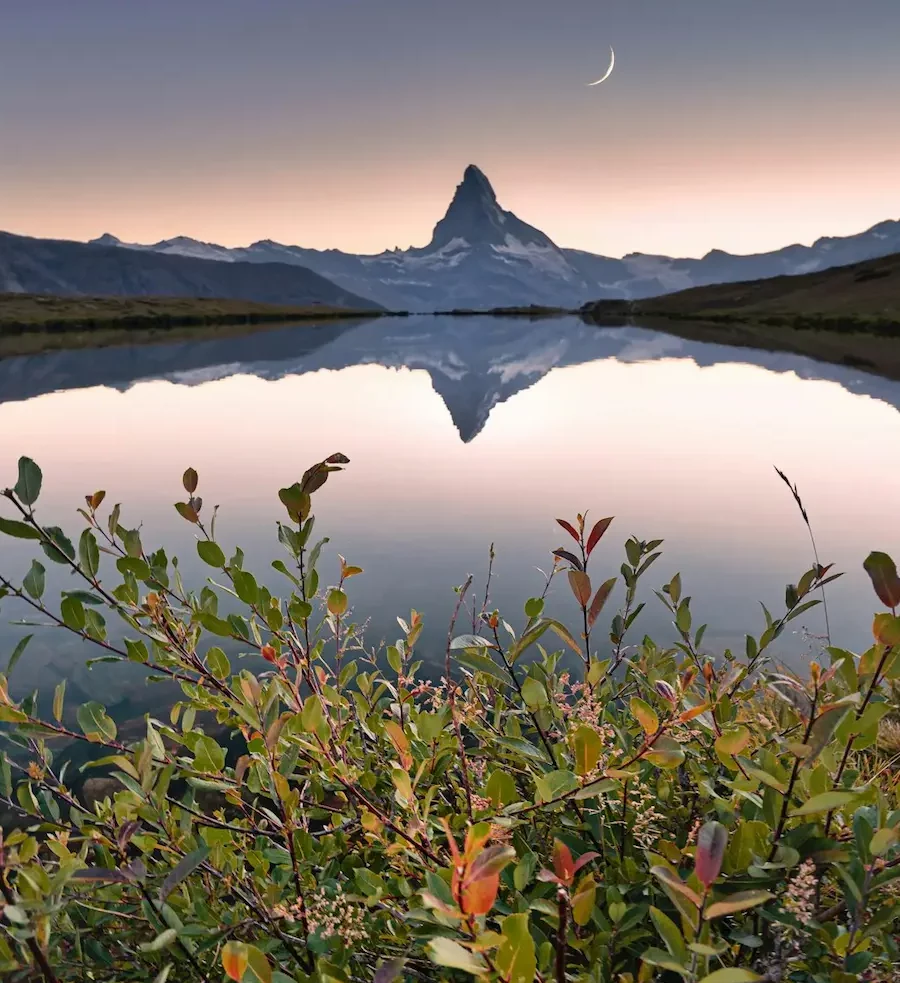
Gstaad offers a more intimate and exclusive Alpine-village atmosphere, while Zermatt takes the journey deeper into the high Alps beneath the Matterhorn.
Montreux provides a complete change of scenery on the Swiss Riviera, combining Lake Geneva with vineyards and Belle Époque hospitality.
Zurich offers a contrasting urban conclusion or starting point, particularly for travellers arriving through eastern Switzerland.
Planning a Luxury Stay in Interlaken
Is Interlaken worth visiting?
Yes. Interlaken combines two Alpine lakes with exceptional access to the Bernese Oberland and Jungfrau Region.
Its strongest advantage is its position, allowing travellers to experience lakes, mountain villages and high-altitude landscapes while maintaining one central base.
What is Interlaken famous for?
Interlaken is best known for its location between Lake Thun and Lake Brienz and as a gateway to the Jungfrau Region.
The Eiger, Mönch and Jungfrau, together with nearby destinations such as Lauterbrunnen and Grindelwald, give the region much of its international appeal.
How many days should you spend in Interlaken?
Three to four days works well for many first visits.
This allows time for Interlaken itself, one significant mountain excursion, one of the lakes and another day exploring a nearby valley or village without making the itinerary excessively rushed.
What is the best time to visit Interlaken?
Spring through autumn works particularly well for travellers who want to combine lakes, hiking and mountain experiences.
Winter offers a very different atmosphere and makes Interlaken a useful base for accessing the snow-covered Jungfrau Region.
Is Interlaken a good base for the Jungfrau Region?
Yes.
Interlaken provides convenient access to the principal transport connections leading towards Lauterbrunnen, Grindelwald, Wengen and Jungfraujoch.
It is particularly suitable for travellers who want to explore several parts of the region while staying in one hotel.
Should I stay in Interlaken, Grindelwald or Lauterbrunnen?
The choice depends on the type of stay.
Interlaken offers the widest access to both lakes and several parts of the Bernese Oberland.
Grindelwald provides a more immediate mountain-resort setting, while Lauterbrunnen places travellers directly within its distinctive Alpine valley.
Is Interlaken good in winter?
Yes, although Interlaken itself is better considered a gateway than a ski resort.
Winter travellers can use the town as a base for the snow and ski areas of the wider Jungfrau Region while returning to Interlaken for hotels, dining and wellness.
Can you see the Jungfrau from Interlaken?
The Jungfrau massif forms part of the mountain panorama visible from Interlaken, although visibility depends on weather and cloud conditions.
Do I need a chauffeur in Interlaken?
Not necessarily for the town centre.
A chauffeur becomes more useful for private excursions, several destinations in one day, luggage movements and journeys through the wider Bernese Oberland.
Is Interlaken suitable for luxury travel?
Yes, but its luxury character is different from destinations such as Gstaad.
Interlaken’s strongest premium proposition comes from exceptional hotels, private access to the surrounding landscapes, scenic experiences and the ability to explore the Bernese Oberland through a carefully planned itinerary.