
Why Visit Bern
Bern offers a very different interpretation of a Swiss city.
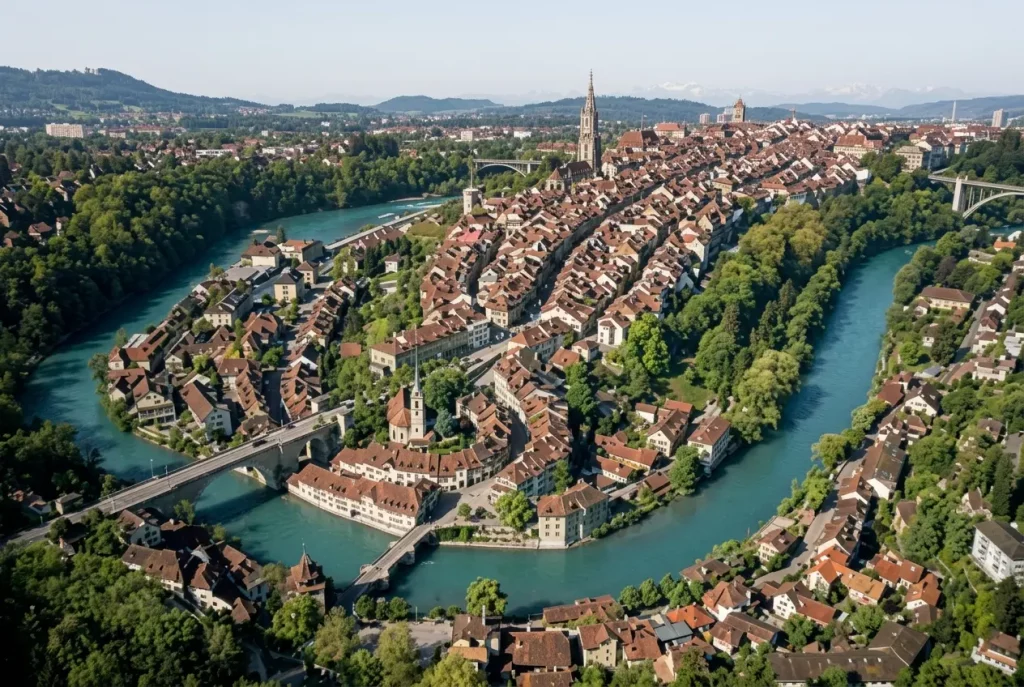
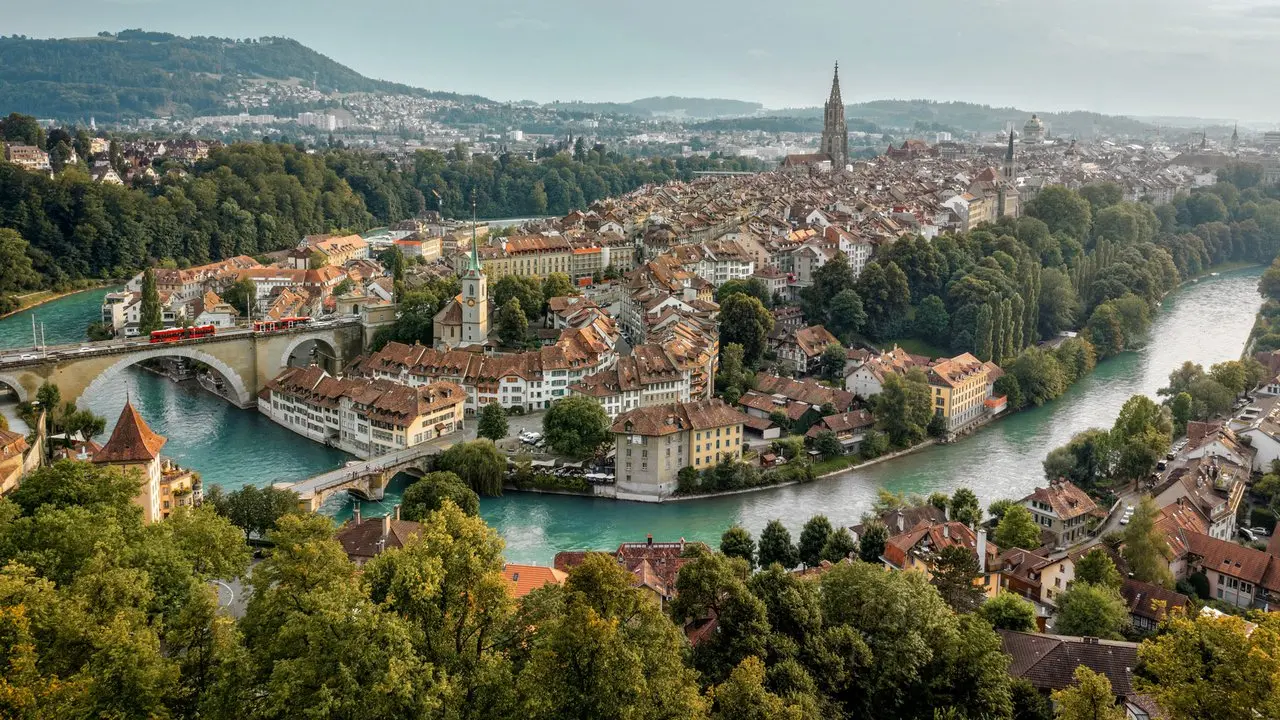
Rather than being defined by scale, shopping or contemporary architecture, its character comes from an exceptionally coherent medieval centre, sandstone buildings, covered arcades and the curve of the Aare around the historic peninsula.
The Old City has been recognised by UNESCO since 1983 and remains a living part of Bern rather than a preserved historic quarter separated from everyday city life.
For private travellers, Bern works particularly well as a slower cultural destination. Historic streets, architecture, restaurants, viewpoints and the river can be experienced without the pace or scale of Switzerland’s larger cities.
Inside Bern’s UNESCO Old Town
Bern’s Old Town provides the strongest expression of the city’s identity.
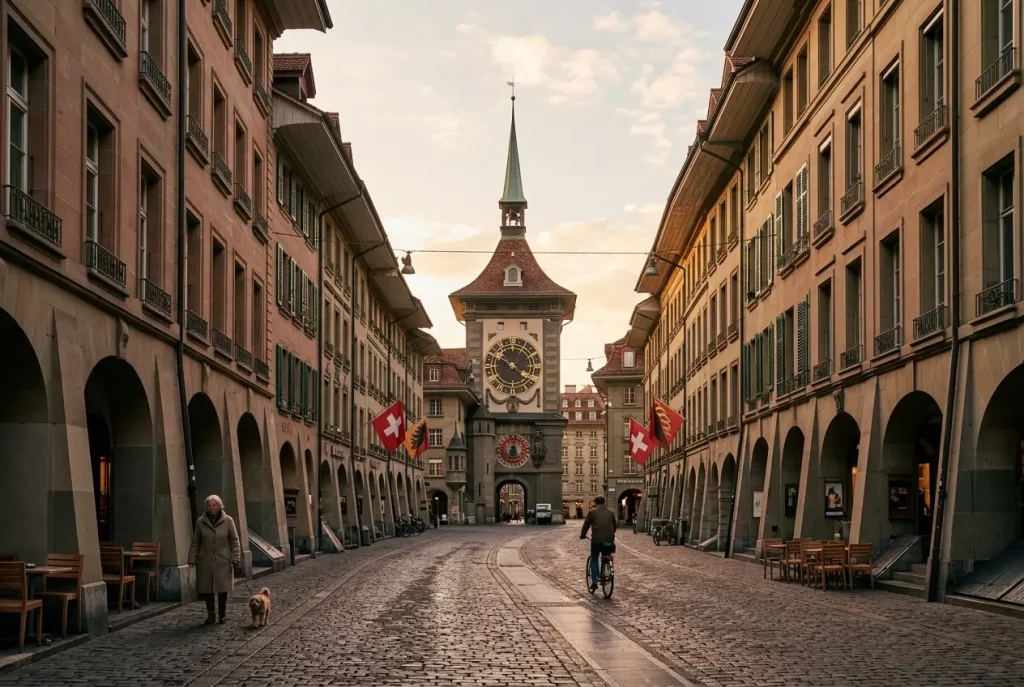
Its medieval street plan, sandstone façades and extensive arcades create a cityscape that feels unusually consistent from one street to the next.
Almost six kilometres of covered arcades extend through the historic centre, giving Bern one of the most distinctive pedestrian environments in Switzerland.
Zytglogge and Kramgasse
The Zytglogge is one of Bern’s defining landmarks.
Originally part of the city’s historic fortifications, the clock tower now stands at the centre of the Old Town and forms a natural reference point between its upper and lower sections.
Its astronomical clock and mechanical figures have become closely associated with Bern, while the surrounding Kramgasse extends deeper into the historic centre beneath the arcades.
A privately guided walk can place the Zytglogge within the wider development of the medieval city rather than treating it as an isolated attraction.
Bern Münster and the Historic Skyline
Bern Münster rises above the Old Town and forms one of the strongest elements of the city skyline.
The surrounding streets reveal changing views towards the Aare, rooftops and the hills beyond the historic centre.
Together with the Zytglogge, fountains and sandstone buildings, the cathedral helps define the architectural character that distinguishes Bern from Switzerland’s other major cities.
Arcades, Fountains and Medieval Streets
Bern is particularly rewarding when experienced slowly.
The covered Lauben allow the historic centre to be explored through a continuous sequence of streets, shops, cafés and architectural details.
Historic fountains and narrow side streets add another layer to the Old Town without requiring the visit to become a checklist of monuments.
The result is a city where medieval urban structure remains part of everyday life.
The Aare and the City Landscape
The Aare shapes Bern almost as strongly as its architecture.
The river curves around the Old Town peninsula, creating steep green slopes and a natural separation between the historic centre and surrounding neighbourhoods.
The River Around the Old City
From several points within Bern, the relationship between the city and the Aare becomes particularly clear.
Bridges connect the historic peninsula with neighbourhoods beyond the river, while riverside paths reveal a greener and quieter side of the city.
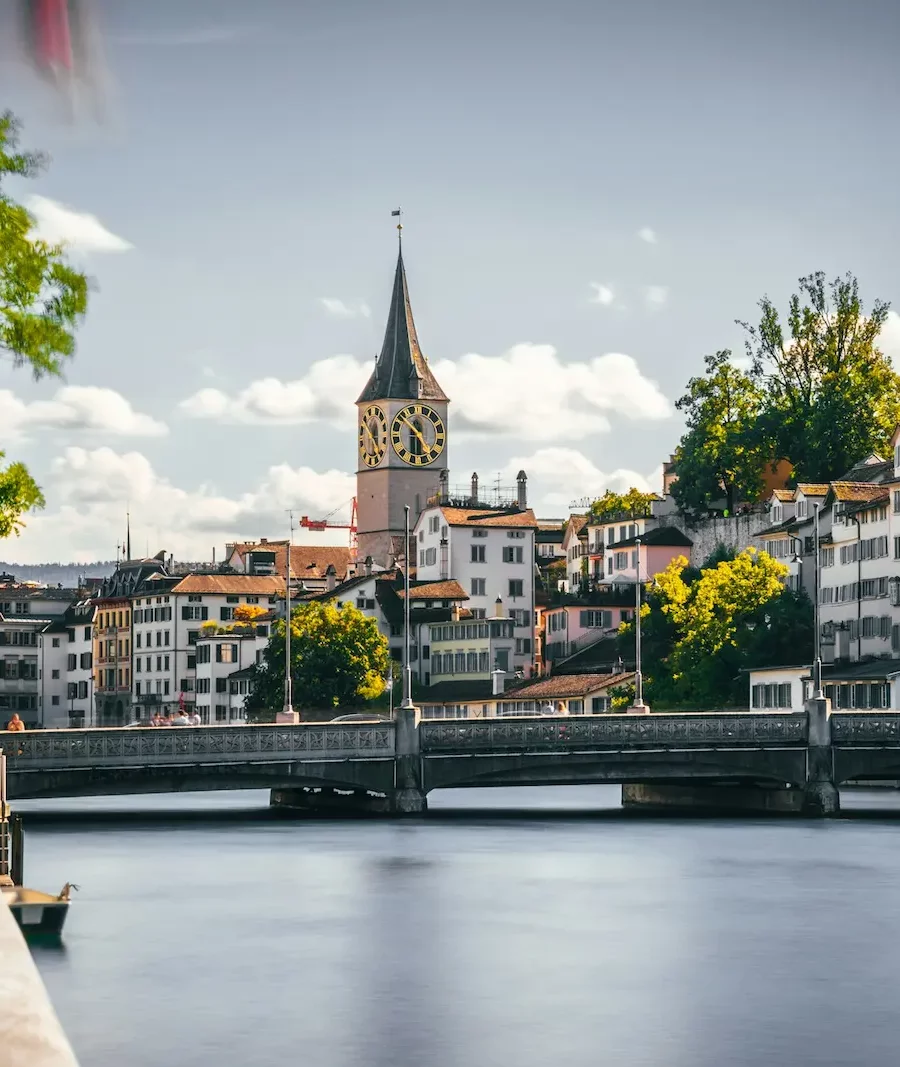
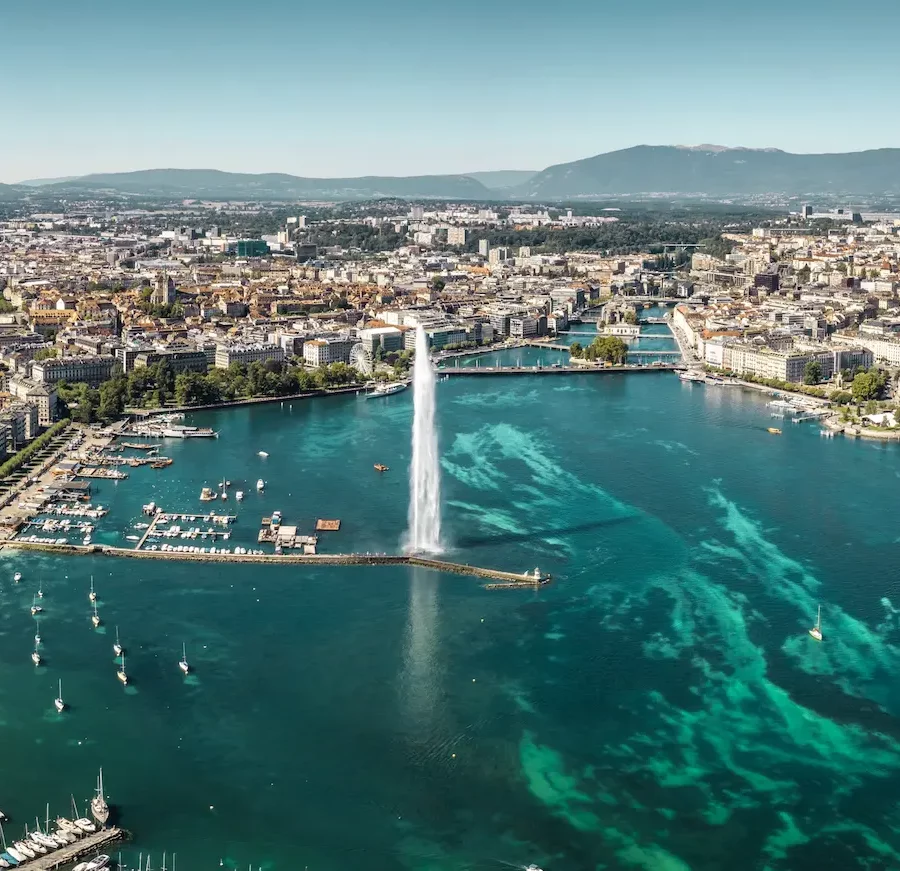
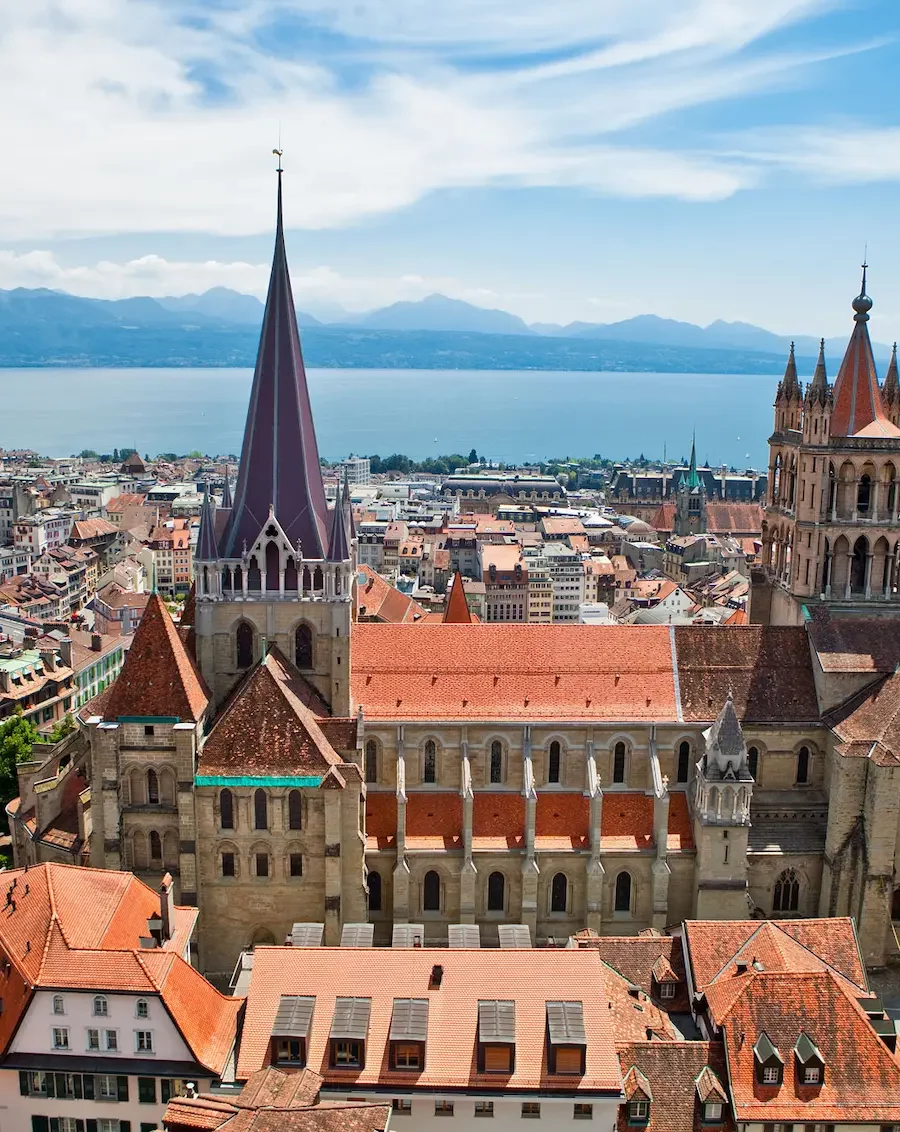
The water also gives Bern a visual identity entirely different from lakefront cities such as Zurich, Lausanne or Lucerne.
Rosengarten and the View over Bern
The Rosengarten provides one of the clearest panoramic views over Bern.
From above the Old Town, the medieval street pattern, cathedral, rooftops and curve of the Aare can be understood within a single landscape.
On clear days, the view extends beyond the city towards the Alps, connecting Bern visually with the mountain regions further south.
Switzerland’s Federal City
Bern is Switzerland’s federal city and the seat of the country’s principal federal institutions.
The Federal Palace forms an important part of the city centre and contributes to Bern’s character, but political institutions are only one layer of the destination.
For travellers, the more interesting contrast is between the importance of the institutions located here and the relatively intimate scale of the surrounding historic city.
Bern feels considerably quieter and more compact than many national capitals.
Where to Stay in Bern
Bern’s premium hotel ecosystem is smaller than those of Geneva or Zurich, but several established properties provide strong options for a private stay.
Bellevue Palace is the city’s defining grand hotel and occupies a prominent position beside the Federal Palace, with views extending towards the Aare and Bernese Alps.
Hotel Schweizerhof Bern & Spa provides another premium option close to the railway station and the upper entrance to the Old Town.
Hotel Savoy Bern offers a more contemporary central stay within easy walking distance of the historic centre.
Unique Hotel Innere Enge provides a quieter alternative outside the immediate Old Town, surrounded by greenery and overlooking the city.
Rather than forcing a large hotel collection, our Bern selection can remain deliberately curated around a small number of properties that genuinely fit the Luxury Switzerland positioning.
Exceptional Experiences in Bern
Bern’s strongest private experiences are centred on history, architecture and the character of the city itself.
A Private Old Town Experience
A private guide can connect the Zytglogge, arcades, fountains, Münster and river landscape through the history of Bern.
The advantage of a private experience is not simply access to more landmarks, but the ability to understand how the city developed and why its medieval structure remains so visible today.
Architecture and Heritage
Bern’s architecture rewards closer attention.
Sandstone façades, arcades, historic fountains and the relationship between public buildings and medieval streets create an unusually coherent urban environment.
A specialist heritage experience can develop this architectural story beyond the principal landmarks.
Culture and Bernese History
Bern’s cultural identity includes figures such as Albert Einstein, who lived and worked in the city during an important period of his career.
These stories can provide additional context within a wider cultural experience without replacing the Old Town as the principal focus of the destination.
Beyond Bern
Bern’s central position also makes it a useful starting point for private journeys into the surrounding region.
Emmental
The Emmental offers a contrasting rural landscape of rolling countryside, farms and villages.
For travellers staying several nights in Bern, a privately planned day in the region can provide a quieter interpretation of the canton beyond the city.
Thun and the Lakes
Thun introduces a different side of the canton through its historic centre and position beside Lake Thun.
It can form part of a broader day before continuing towards the Bernese Oberland.
Towards the Bernese Oberland
Bern also provides convenient onward access towards the mountains.
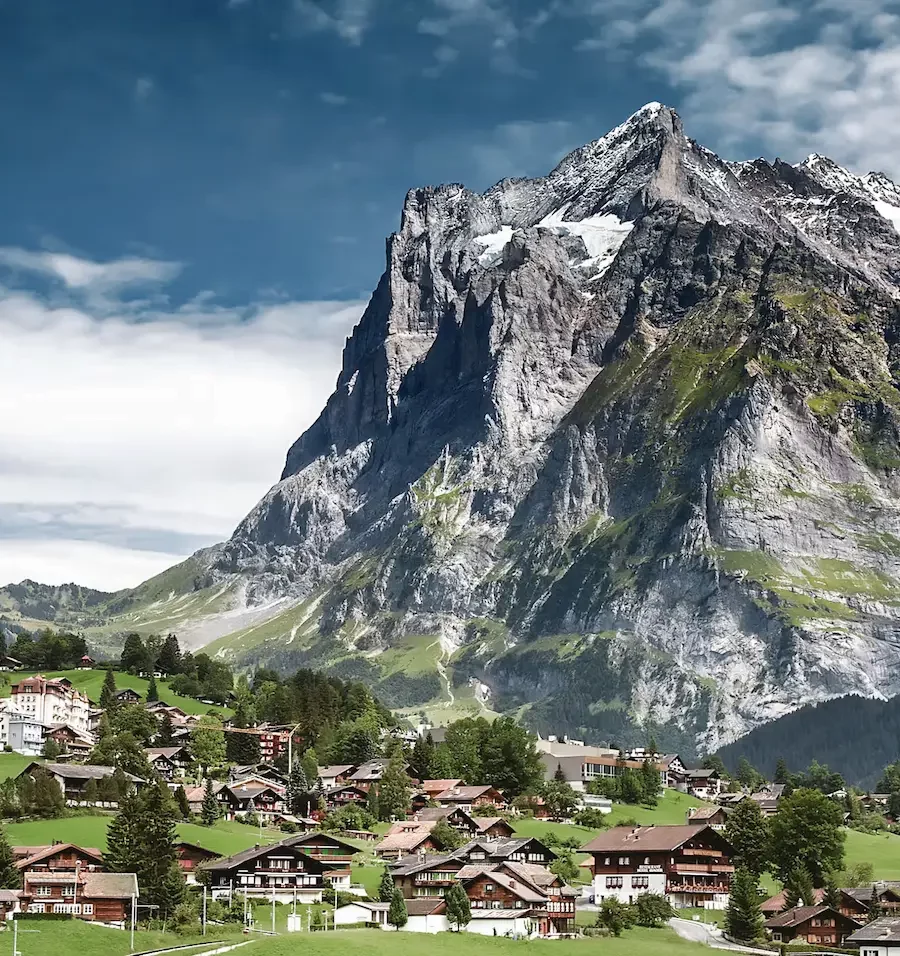
For detailed planning around Interlaken, Lauterbrunnen, Grindelwald and the Jungfrau Region, our Interlaken destination guide remains the dedicated hub.
Bern should remain a city destination rather than attempting to absorb the wider Bernese Oberland.
Getting Around Bern Privately
Bern’s historic centre is compact and can largely be explored on foot.
Private travel becomes more valuable for airport arrivals, luggage, regional excursions and journeys continuing beyond the city.
The city’s central position also makes it a practical point within wider itineraries linking Basel, Zurich, Lucerne and the Bernese Oberland.
Unlike some other destinations in the Luxury Switzerland collection, Bern does not currently require a large number of dedicated point-to-point Transfer pages.
A destination-specific chauffeur service can instead support flexible travel around the city and surrounding region.
Continue Your Journey
Basel and Zurich
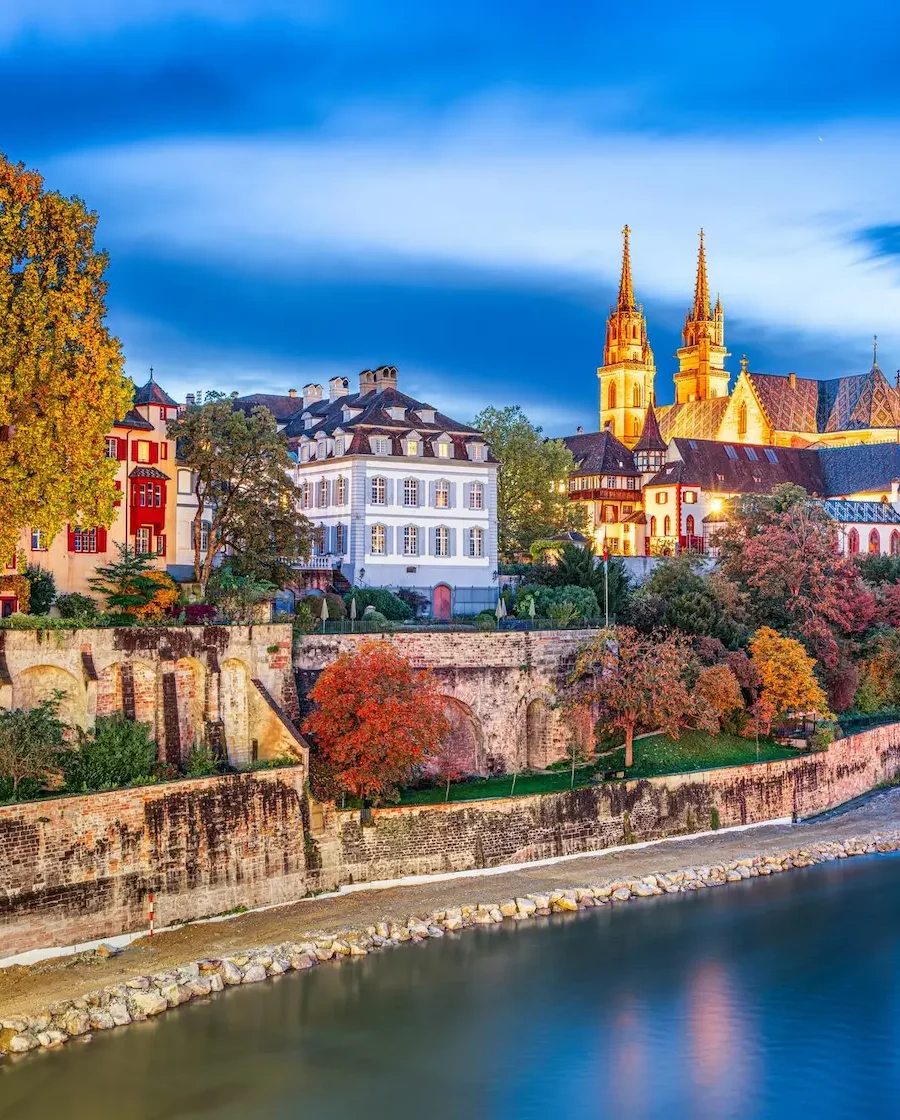
Basel provides a strong cultural contrast, centred on art, architecture and the Rhine.
Zurich offers a larger and more cosmopolitan city experience built around Lake Zurich, art, gastronomy and shopping.
Lucerne
Lucerne combines historic architecture with Lake Lucerne and immediate access to Mount Pilatus and Mount Rigi.
Interlaken and the Bernese Oberland
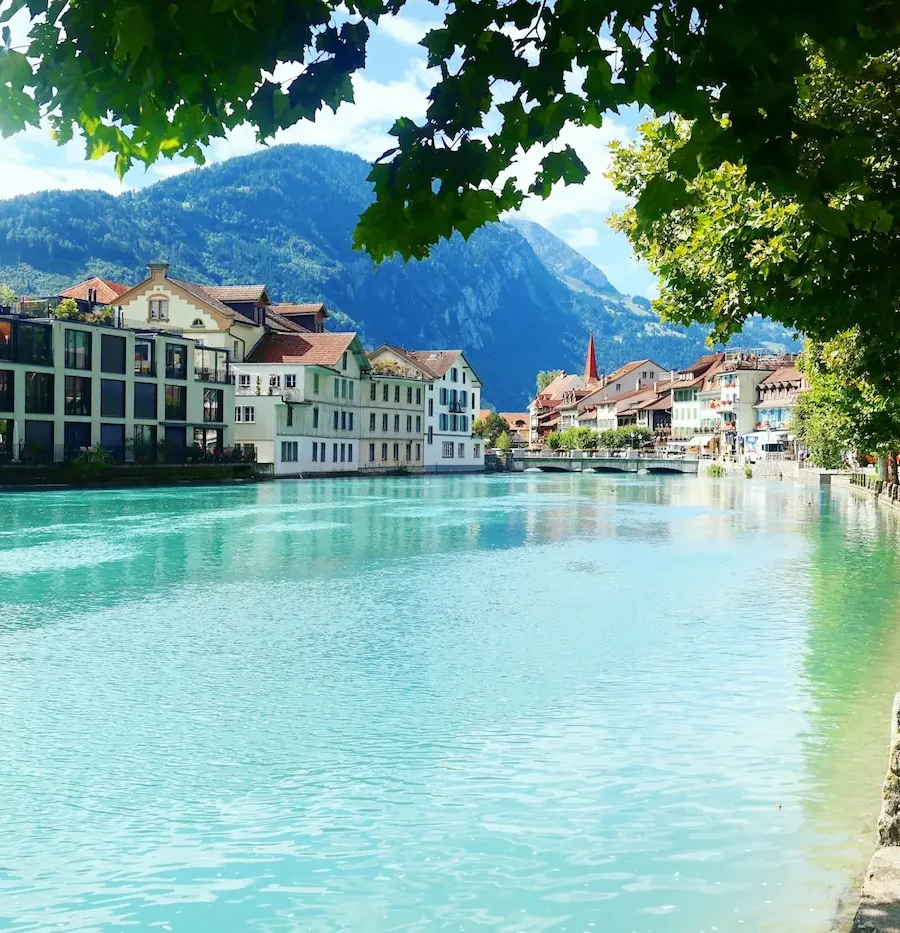
Interlaken continues the journey towards the Bernese Oberland, Lake Thun, Lake Brienz and the Jungfrau Region.
This provides a natural transition from Bern’s medieval urban heritage towards the landscapes of the Swiss Alps.
Planning a Luxury Stay in Bern
Is Bern worth visiting?
Yes.
Bern is particularly rewarding for travellers interested in architecture, history and cities with a strong sense of place.
Its UNESCO-listed Old Town, extensive arcades and relationship with the Aare make it very different from Switzerland’s larger urban destinations.
What is Bern famous for?
Bern is best known for its UNESCO-listed Old Town, the Zytglogge, medieval arcades, the Aare and its role as Switzerland’s federal city.
How many days should you spend in Bern?
Two days works well for many first visits.
This allows time for the Old Town, architecture, river landscape and a private cultural experience.
A third day becomes worthwhile when adding Emmental, Thun or another regional excursion.
Is Bern the capital of Switzerland?
Bern is officially referred to as Switzerland’s federal city and is the seat of the federal government and parliament.
It performs the role normally associated with a national capital, although Swiss terminology traditionally uses “federal city”.
Is Bern Old Town worth visiting?
Yes.
The Old Town is the defining part of the destination and has been recognised as a UNESCO World Heritage Site since 1983.
Its arcades, sandstone architecture, Zytglogge and medieval street plan make it particularly rewarding to explore on foot.
Is Bern better than Zurich for history?
They offer different experiences.
Zurich combines historic areas with a much larger cosmopolitan, commercial and cultural city.
Bern’s historical character is more dominant, with the medieval Old Town shaping the identity of the destination as a whole.
Is Bern walkable?
Yes.
Most of the principal historic areas can be explored comfortably on foot.
The Old Town’s extensive covered arcades also make walking an integral part of experiencing the city.
Is Bern a good base for the Bernese Oberland?
Bern can work as a gateway, but it should not replace staying in the mountain region itself.
Travellers focused on Lauterbrunnen, Grindelwald and the Jungfrau Region will generally gain more from using Interlaken or another Alpine destination as their base.
What is the best time to visit Bern?
Bern works throughout the year.
Spring through autumn is particularly attractive for walking, the river landscape and regional excursions.
Winter provides a quieter atmosphere within the historic centre and a different interpretation of its medieval streets.
Is Bern suitable for luxury travel?
Yes, although its premium character is understated.
Bern’s appeal lies less in a large luxury-hotel ecosystem and more in private heritage experiences, exceptional historic architecture, carefully selected hotels and a slower style of city travel.
Do I need a chauffeur in Bern?
Not necessarily within the Old Town.
A chauffeur becomes more valuable for airport transfers, luggage, regional excursions and journeys continuing to other parts of Switzerland.