
Why Visit Zermatt
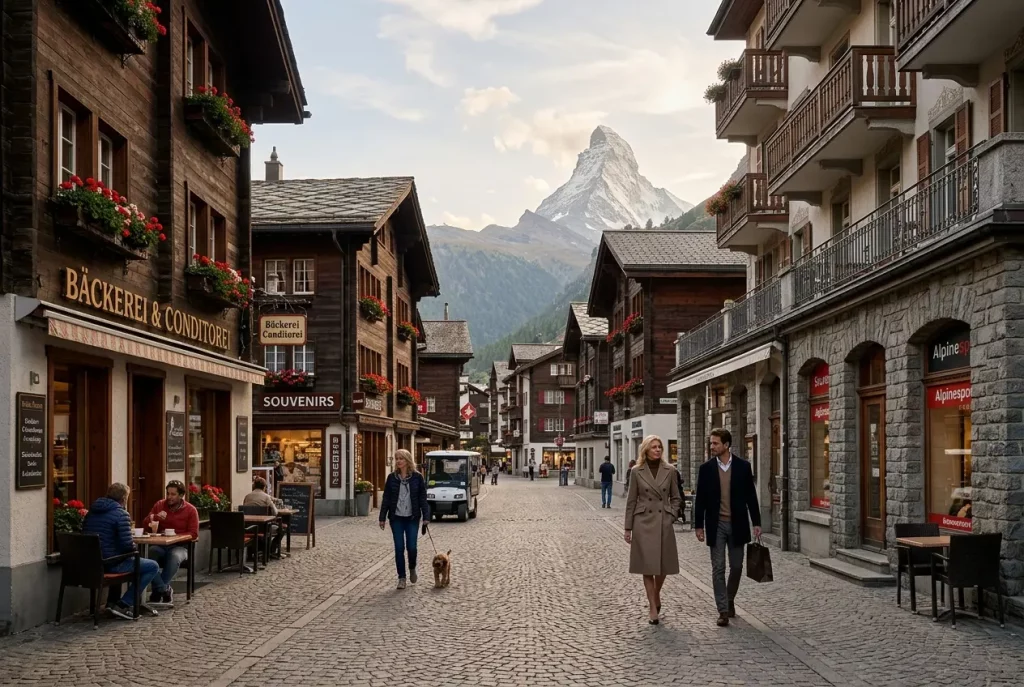
Zermatt is one of the most distinctive destinations in the Swiss Alps, shaped as much by its relationship with the Matterhorn as by the character of the village itself.
The absence of conventional private-car traffic gives the resort a noticeably different rhythm from many other Alpine destinations. Hotels, restaurants, mountain railways, ski lifts and the historic centre all form part of a compact village surrounded by some of Switzerland’s highest peaks.
Zermatt also works across very different seasons. Winter brings skiing and high-altitude mountain experiences, while summer transforms the surrounding landscape into a destination for hiking, mountain railways, gastronomy and days spent at altitude.
For travellers building a wider Swiss itinerary, Zermatt provides a striking contrast with the lakeside atmosphere of Geneva and Montreux, the Bernese Oberland and Switzerland’s major cities.
The Matterhorn
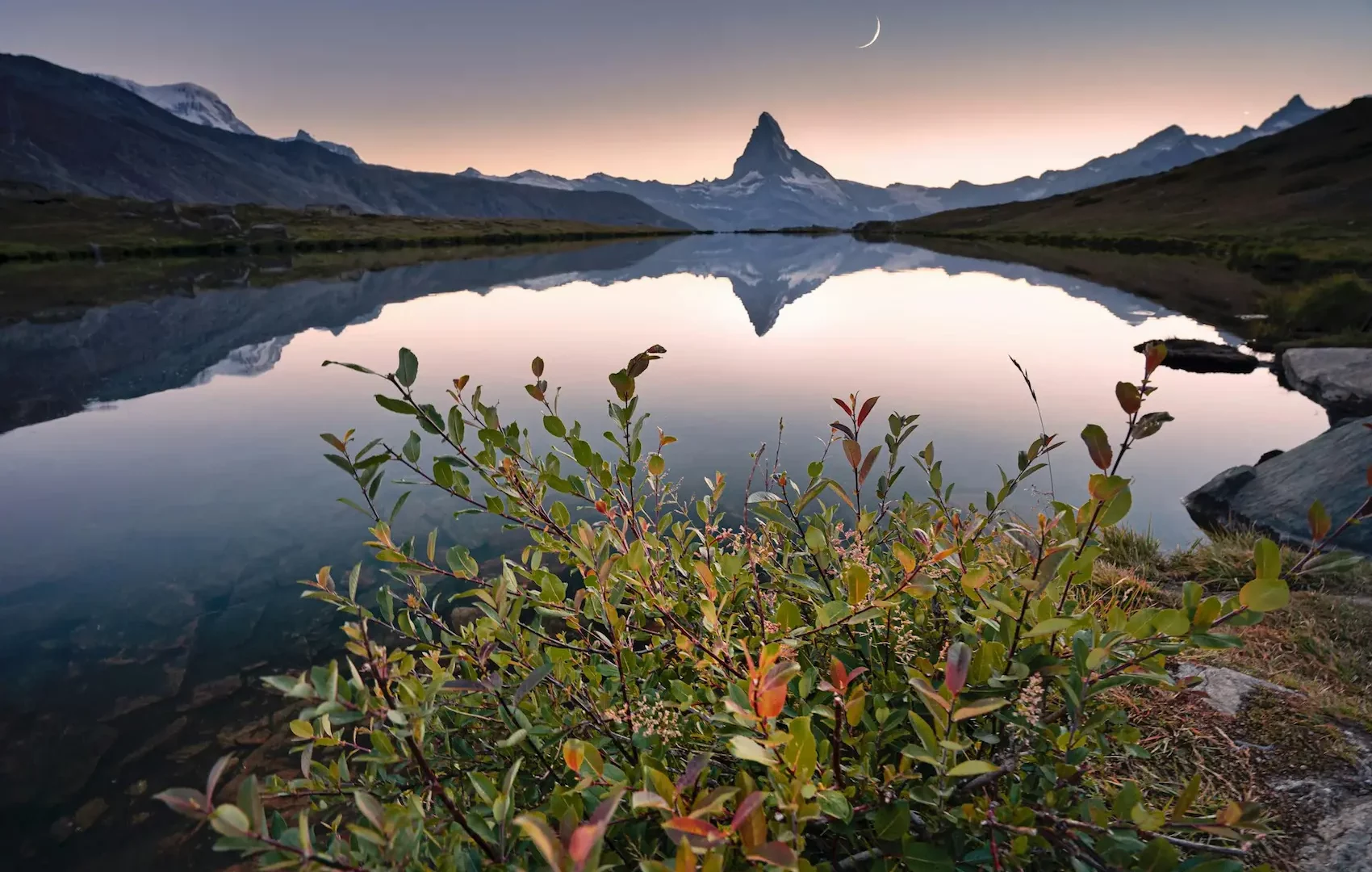
The Matterhorn is inseparable from Zermatt’s identity.
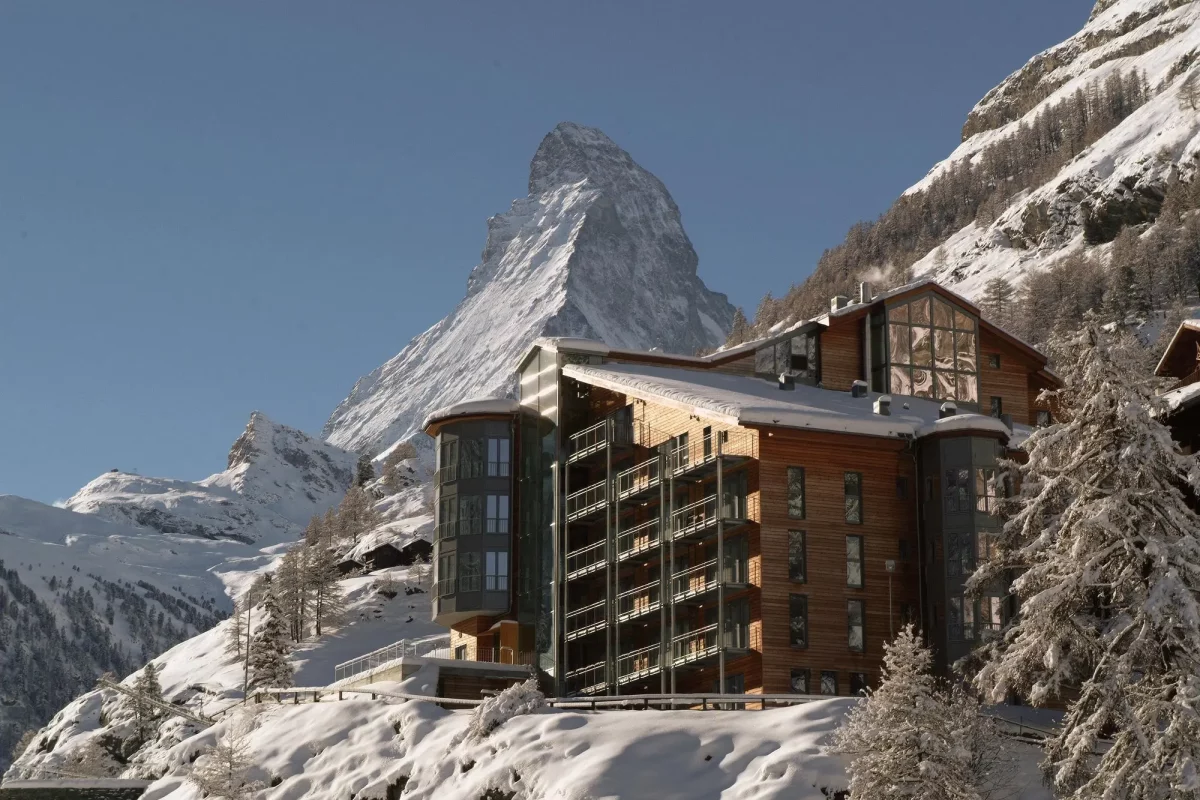
Its distinctive profile dominates the landscape around the village and remains visible from numerous viewpoints, hotels, mountain restaurants and hiking areas.
Experiencing the Matterhorn, however, is not limited to seeing the mountain from the village.
Gornergrat and the High Alps
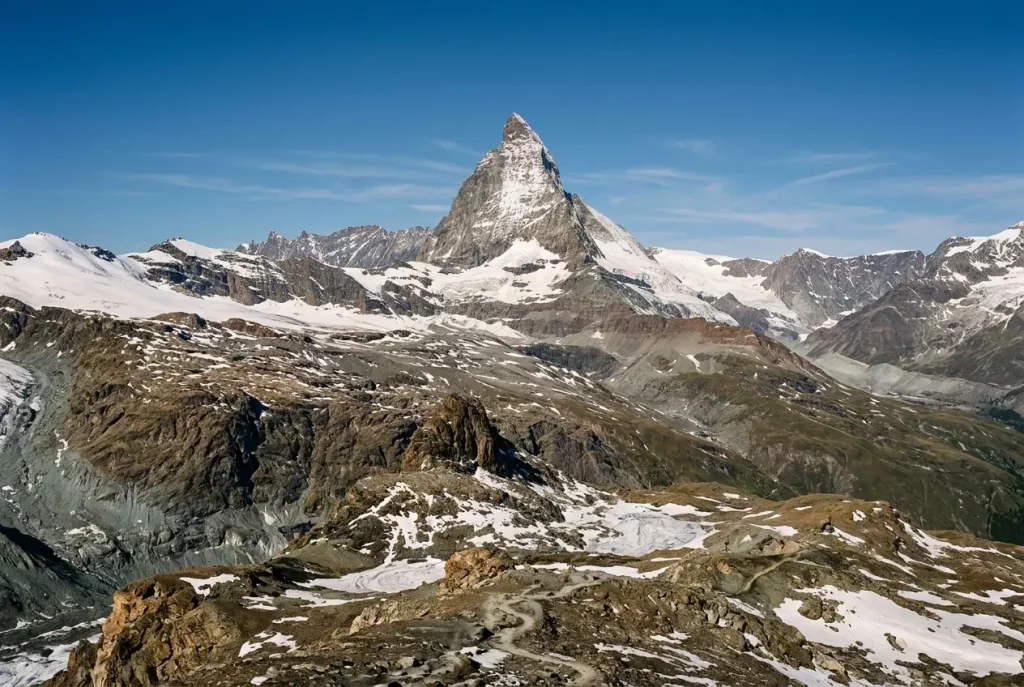
The Gornergrat railway climbs from Zermatt at 1,604 metres to 3,089 metres, with the journey taking approximately 33 minutes. At the top, the landscape opens towards the Matterhorn, glaciers and numerous peaks above 4,000 metres.
It is one of the defining mountain experiences accessible directly from Zermatt and can be approached as much for the journey and landscape as for the viewpoint itself.
Matterhorn Glacier Paradise
Another perspective comes from Matterhorn Glacier Paradise, at 3,883 metres above sea level.
The journey reaches a high-Alpine environment of glaciers, snow and surrounding peaks, with viewing areas overlooking an extraordinary part of the Alps.
Zermatt Through the Seasons
Zermatt is not defined by a single season.
Search demand is substantially stronger around skiing and winter, but summer is also an important part of the destination’s identity.
Winter in Zermatt
Winter places skiing, mountain dining and the high-Alpine landscape at the centre of the stay.
For private travellers, the experience can combine days on the mountain with restaurants, wellness, shopping and time in the village rather than treating Zermatt solely as a ski resort.
Guests travelling with skis or significant winter luggage should also consider those requirements when planning their arrival and accommodation.
Summer in Zermatt
Summer reveals a different side of Zermatt.
Mountain railways provide access to higher elevations while hiking routes connect viewpoints, lakes, forests and Alpine landscapes around the Matterhorn.
Experiences such as the Five Lakes area, Gornergrat and the surrounding mountain paths allow Zermatt to work as a genuine summer destination rather than simply an alternative version of the ski season.
When to Visit Zermatt
There is no single best season.
Winter is the natural choice for travellers prioritising skiing and snow, while summer suits hiking, mountain landscapes and longer days outdoors.
The right period depends primarily on the experience around which the stay is being designed.
Where to Stay in Zermatt
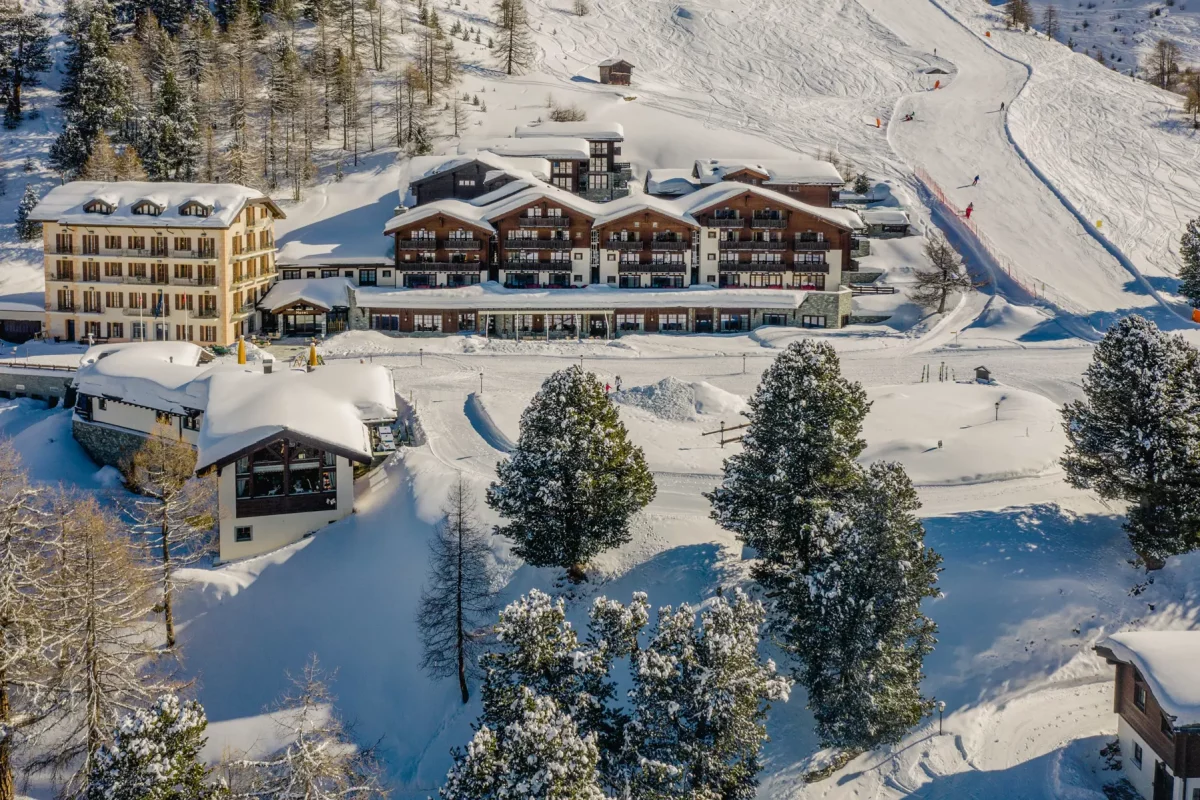
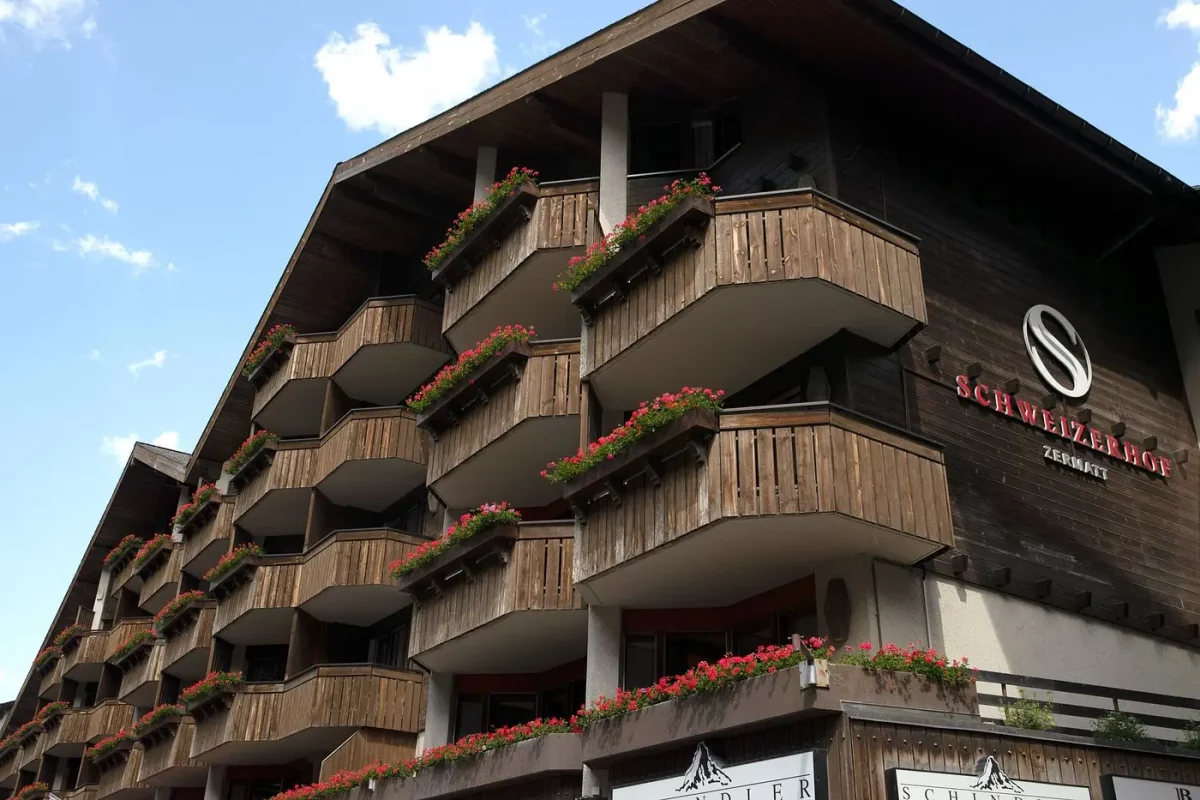
Zermatt offers remarkably different interpretations of Alpine hospitality, from historic grand hotels in the centre of the village to contemporary mountain resorts and secluded properties high above the valley.
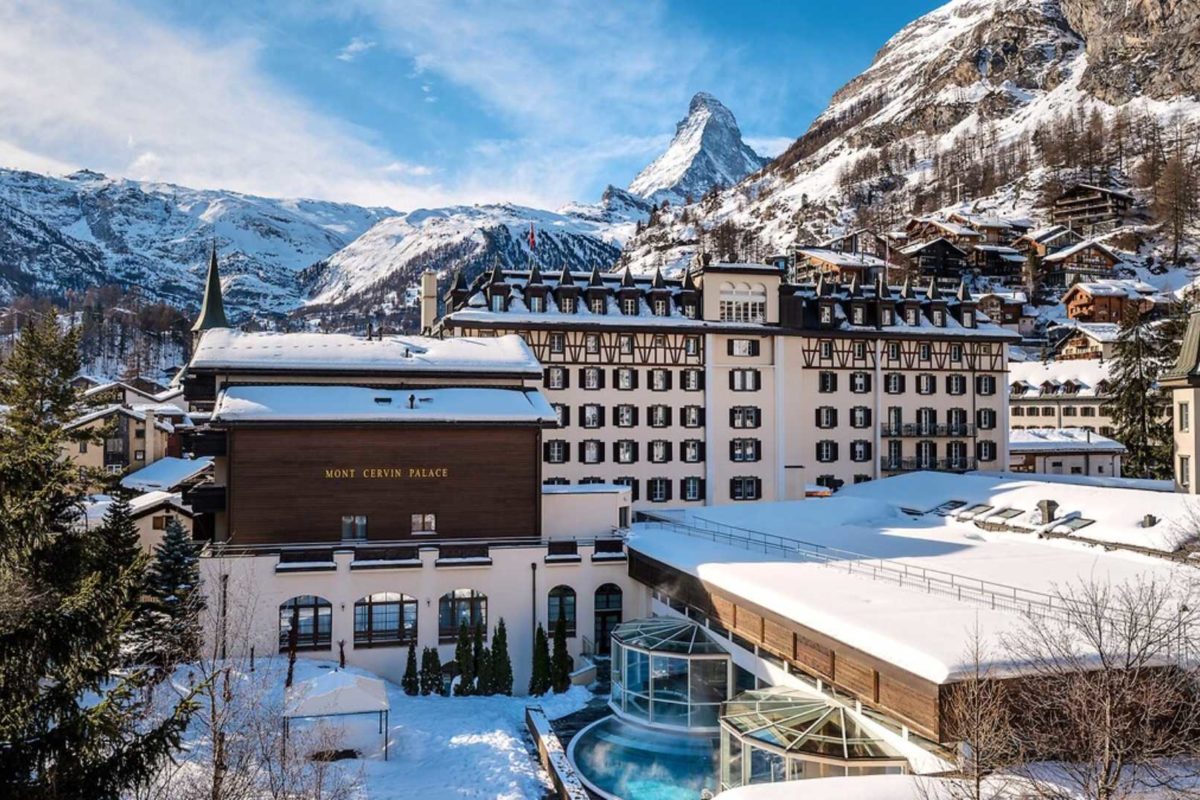
Mont Cervin Palace is one of Zermatt’s historic addresses, closely connected to the development of tourism in the village and centrally positioned on Bahnhofstrasse. Its history in Zermatt extends back to 1857.
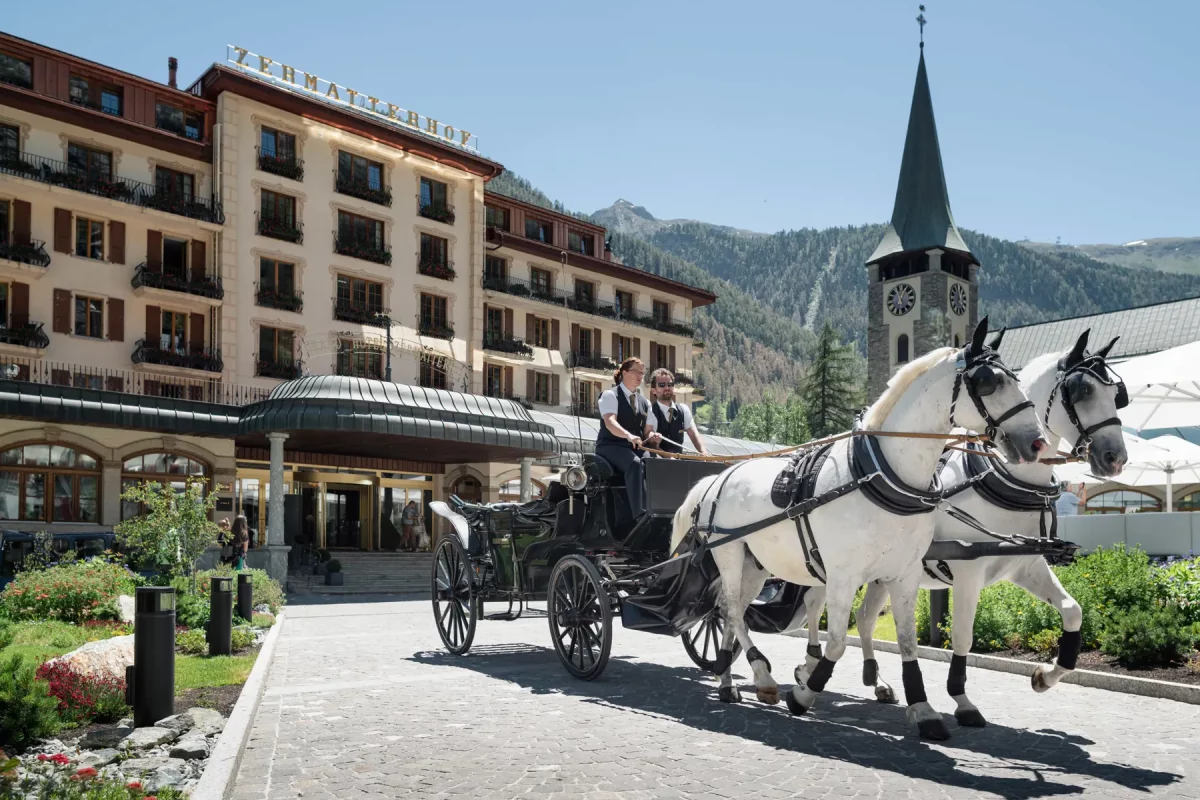
Grand Hotel Zermatterhof offers another traditional interpretation of the resort, directly in the heart of Zermatt, with a long history and views towards the Matterhorn.
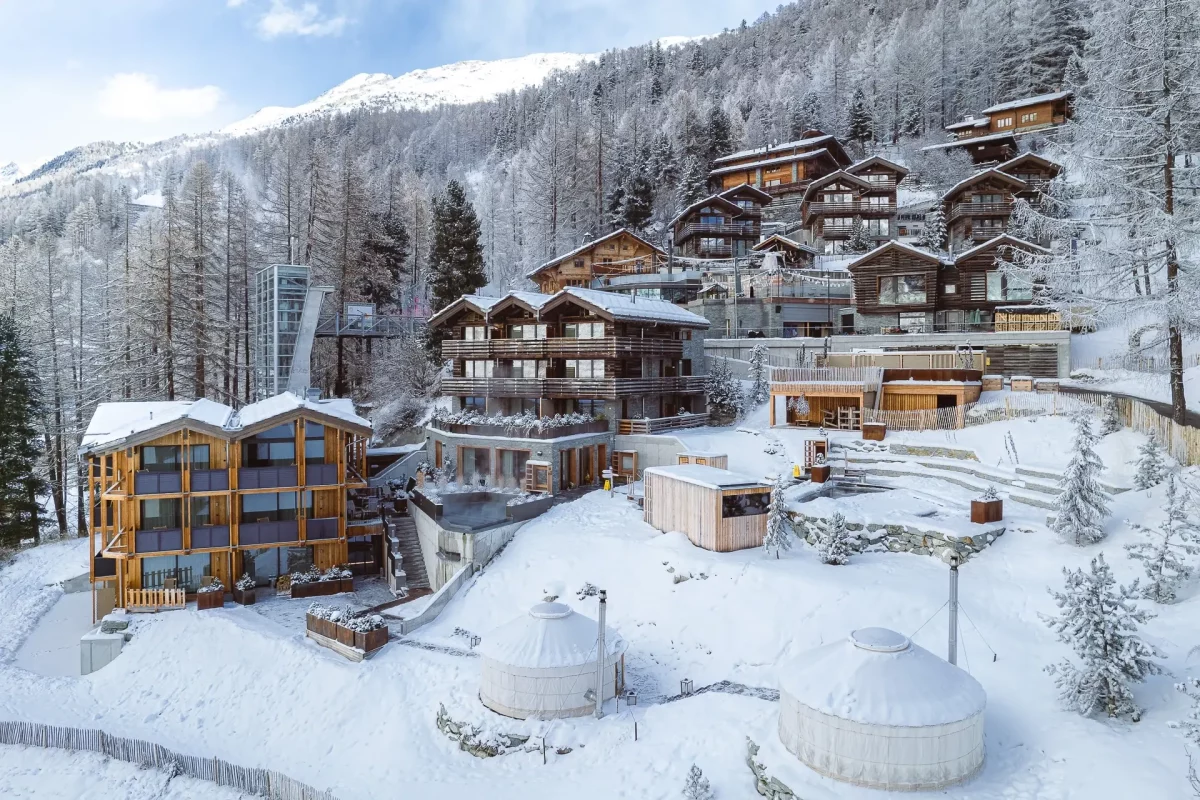
For a more contemporary Alpine atmosphere, CERVO Mountain Resort combines modern design with different accommodation concepts overlooking Zermatt and the Matterhorn.
The Omnia takes a more intimate approach, elevated above the village on its rocky setting while remaining in central Zermatt.
Higher on the mountain, Riffelalp Resort 2,222m offers a very different sense of place, with a secluded high-Alpine setting and direct connection to the surrounding mountain landscape.
For travellers drawn to contemporary art and design, Backstage Hotel Vernissage offers a distinctive alternative in the centre of the village, shaped around the architecture and creative work of Heinz Julen.
Our Zermatt hotel selection will progressively bring together these different styles of stay, allowing travellers to choose between village life, Matterhorn views, design-led hospitality and a more secluded mountain setting.
Exceptional Experiences in Zermatt
Zermatt becomes particularly compelling when the village and mountain are considered as one destination rather than two separate experiences.
On the Mountain
Gornergrat and Matterhorn Glacier Paradise provide two very different ways to reach the high Alps directly from Zermatt.
Skiing dominates much of the winter identity of the destination, while summer opens an extensive network of mountain paths and viewpoints.
These experiences deserve their own dedicated pages over time, particularly Gornergrat, Matterhorn Glacier Paradise and private guided mountain experiences.
Mountain Dining and Gastronomy
Zermatt’s relationship with the mountains also extends to its restaurants.
Dining can form part of the day on the mountain itself, with huts, terraces and restaurants positioned throughout the surrounding Alpine landscape. Zermatt Bergbahnen specifically highlights mountain gastronomy as part of the Matterhorn experience.
Back in the village, the choice ranges from traditional Alpine dining to contemporary gastronomy and hotel restaurants.
Private Experiences
Private ski instruction, guided hiking, helicopter experiences and individually planned mountain days can add another level of flexibility to a Zermatt stay.
Rather than listing every possibility here, Luxury Switzerland can progressively develop dedicated experience pages around the most distinctive ways to experience the destination.
The Car-Free Village
Zermatt’s car-free character is one of the defining features of the destination.
Under the standard access system, conventional private vehicles travel only as far as Täsch, approximately five kilometres before Zermatt. From there, visitors normally continue into the village by shuttle train or other authorised transportation.
The shuttle train from Täsch runs frequently, with the journey itself taking approximately 12 minutes according to local hotel arrival information.
Once in Zermatt, movement within the village relies on walking, electric vehicles and local transport rather than conventional private cars. Zermatt Tourism describes the village as having always been car-free.
Arriving Privately in Zermatt
For private travellers, the important point is not simply reaching Täsch but coordinating the complete arrival through to the accommodation.
Luxury Switzerland can plan the journey around luggage, passengers and the final hotel. Where the applicable road authorisation allows, the journey can continue beyond Täsch to the authorised arrival point near Zermatt, with the final handover coordinated with the hotel and its electric shuttle where appropriate.
Getting to Zermatt Privately
Zermatt’s unusual access makes planning the final arrival more important than for many Swiss destinations.
Travellers arriving through Geneva can use our Geneva to Zermatt Private Transfer for detailed route information, including the journey from Geneva Airport and the final arrival arrangements for Zermatt.
Continue Your Journey from Zermatt
Zermatt can form either the final destination of a Swiss itinerary or one of several contrasting stages.
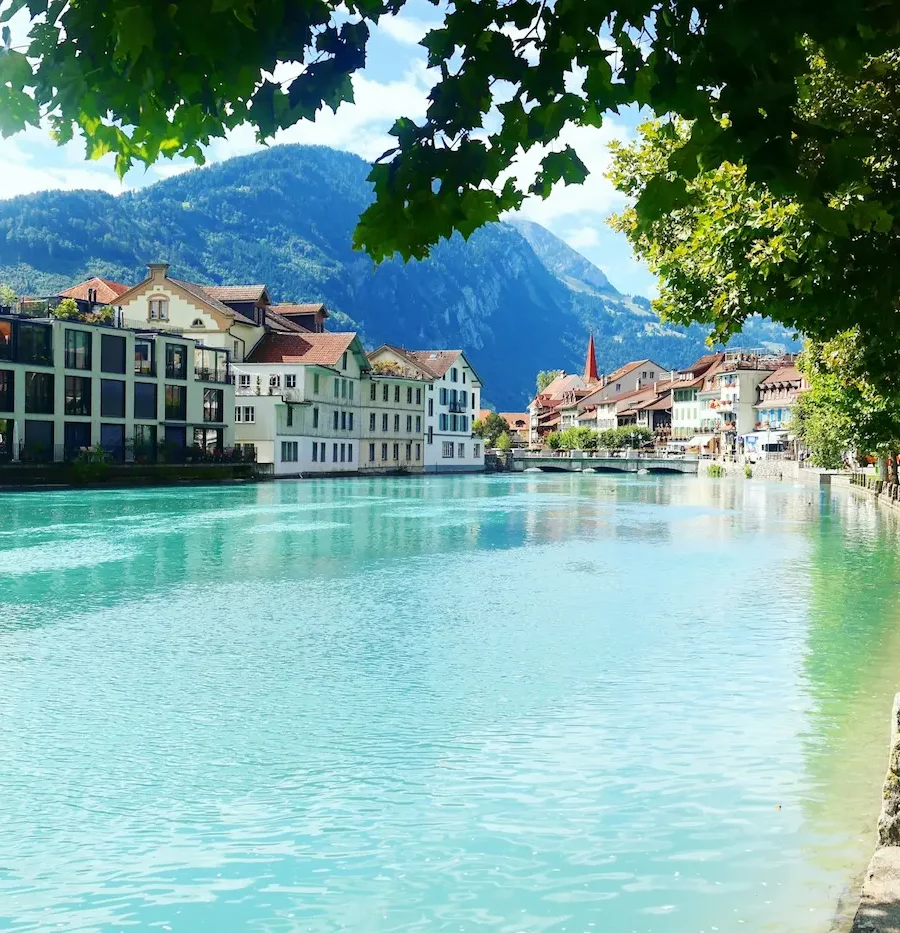
The lakeside atmosphere of Montreux, the Alpine character of Gstaad, the Bernese Oberland around Interlaken and the urban experience of Zurich each offer a very different continuation.
Private travel allows these transitions to be planned around the full itinerary, luggage and accommodation rather than as isolated transport arrangements.
Planning a Luxury Stay in Zermatt
Is Zermatt worth visiting?
Yes. Zermatt combines one of Switzerland’s most recognisable mountain landscapes with a distinctive car-free village, high-Alpine experiences, skiing, hiking, hospitality and gastronomy.
It is particularly rewarding for travellers who want the mountain itself to be a central part of the stay.
What is Zermatt famous for?
Zermatt is most closely associated with the Matterhorn.
The destination is also known for its car-free village, skiing, mountain railways and year-round access to high-Alpine landscapes.
How many days should you spend in Zermatt?
Three to four days works well for many first visits.
This provides enough flexibility to experience the village, the Matterhorn from different perspectives and at least one major mountain excursion without making the stay entirely dependent on a single day of weather.
What is the best time to visit Zermatt?
That depends on the purpose of the journey.
Winter is the natural choice for skiing and snow-based experiences, while summer offers hiking, mountain railways and a different perspective on the Alpine landscape.
Is Zermatt car-free?
Yes. Conventional private vehicle access ends in Täsch under the standard arrival system, and Zermatt itself operates largely through walking, electric vehicles and local transport.
Can you drive directly into Zermatt?
Conventional private vehicles cannot normally drive into Zermatt.
Specific authorised vehicles operate under different access arrangements. For a private transfer, the final arrival should therefore be planned according to the applicable authorisation and hotel arrangements rather than assuming normal road access.
Is Zermatt worth visiting in summer?
Yes. Summer shifts the focus from skiing towards hiking, mountain railways, high-altitude viewpoints and outdoor experiences around the Matterhorn.
Can you see the Matterhorn from Zermatt?
The Matterhorn is visible from many locations in and around Zermatt, although visibility always depends on weather and cloud conditions.
Do I need a chauffeur while staying in Zermatt?
Usually not for ordinary movement within the village.
Zermatt’s car-free structure means walking, electric local transport and mountain railways play a much larger role than in other destinations.
Private chauffeur travel is primarily useful for arriving, departing and connecting Zermatt with other destinations in Switzerland.